Showing posts with label wildlife. Show all posts

Thursday, 22 February 2018

First outing with the Canon 7d mark II

I am so late to this party.

Great egret reflections

Snowy egret

I've been using a Canon 7D since around 2010 and it's been a great camera for me as an wildlife-photography enthusiast. I mean, the low-light performance was never great, and the autofocus had a tendency to lose the subject and hunt if the light was flat or your subject was moving too fast to track easily (and the settings only helped so much), but it was a great camera that took far more great photos than it missed and it was more than able to  put up with the years of abuse I treated it to. ...And I treated it pretty badly. That camera has more scrapes, dents, mud and fish scales embedded into it than any electronic device should have, but it still works great. In fact the only repair it ever needed was a screen replacement after I left it on the floor on a fishing boat and accidentally kicked it into a bolt. ...Yeah.

A great grey heron being fluffy

A blue heron in flight

Then I picked up a refurbished Canon 7D mark II in the sales (which is a four-year old model now) and was rapidly brought up to speed on what everyone's been talking about this whole time when they say this is an incredible upgrade. It really is. I've only had this camera out a couple of times so far, so I've not got anything of particular artistic merit to share, but I've managed more than a few photos that simply wouldn't be possible with the original 7D. The 100% viewfinder is a surprisingly helpful improvement over the old 95% which makes it much easier to get everything you want in-frame, the extra focus points are great, and the camera itself feels solid and extremely comfortable to hold. So far though, the story for me is all about the autofocus because once this thing locks onto a target, it just won't let go.

The AF holds on despite distractions in the foreground

This was shot through tall grass from a moving car. The AF locked on and didn't let go, and produced more than enough detail for an record and ID. It's a tri-coloured 

This was shot handheld.

I've had a quick run through the various autofocus settings, but it seems like the facial recognition plus "tennis mode" suit my needs pretty much perfectly. It is waaaaay easier to track birds in flight with the mark II, especially at a distance or when they're hiding out against a busy background, or when your non-birding, unenthisiastic driver doesn't quite stop the car while you're hanging out the window looking for wildlife. I mean, I know that none of those things are likely to combine to produce award-winning photographs any time soon compared to frame-filling portraits with beautifully-blurred backgrounds, but sometimes you just want a cool record shot!

A wood stork in the tall grass

So that's what I've got with it so far! Hopefully I'll have some time to get out a bit more soon and play around with it again, but my work schedule is kind of exploding around my ears so we'll see what happens! 


Friday, 24 November 2017

Florida Alligators


If there's one thing that Florida is famous for (besides oranges and Florida man), it's alligators! You can find them pretty much everywhere in the Everglades, and can be found in city drainage ditches, canals, golf courses and swimming pools, setting up basically anywhere they wherever there's fresh water and food. Fortunately, while American alligators are large, apex predators, they pose no real threat to adult humans, prefering to avoid us and feed on smaller prey like birds, fish, reptiles, amphibians or smaller mammals.

A female alligator, watching us pass.

One of our favourite ways to see alligators is to take an airboat ride out in the Everglades. There are a ton of different operators to choose from, but we tend to go out from the Everglades Safari Park because they offer a good tour and it's relatively close to where we live. They're obviously geared mostly towards alligator sightings, but there are usually plenty of birds to see as well (though that's for another blog!), and you can get some beautiful evening light if you head over there for the late afternoon trips (~ 4pm).

My what shiny teeth you have!

Anyway, without further ado, here are a few of my favourite 'gator photos so far! You can see all of these images (and more) in my website gallery. As usual, you can click on each image to see a larger image.

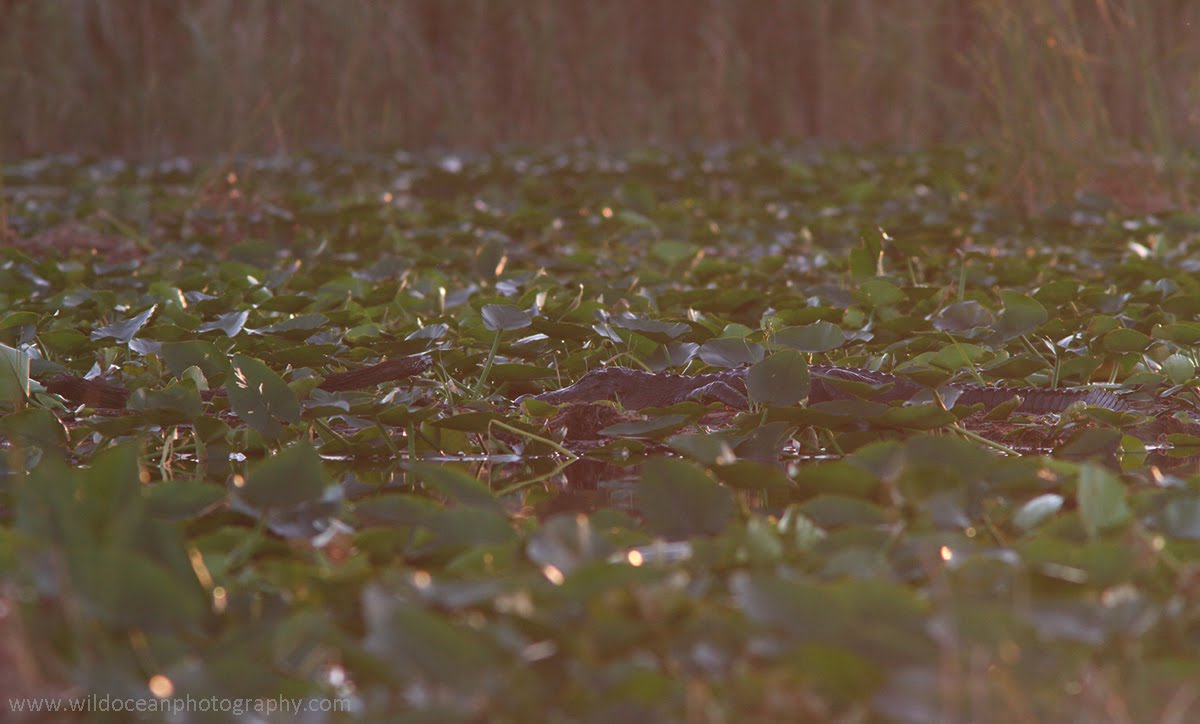
A one-eyed alligator relaxing on a muddy rise in the Everglades

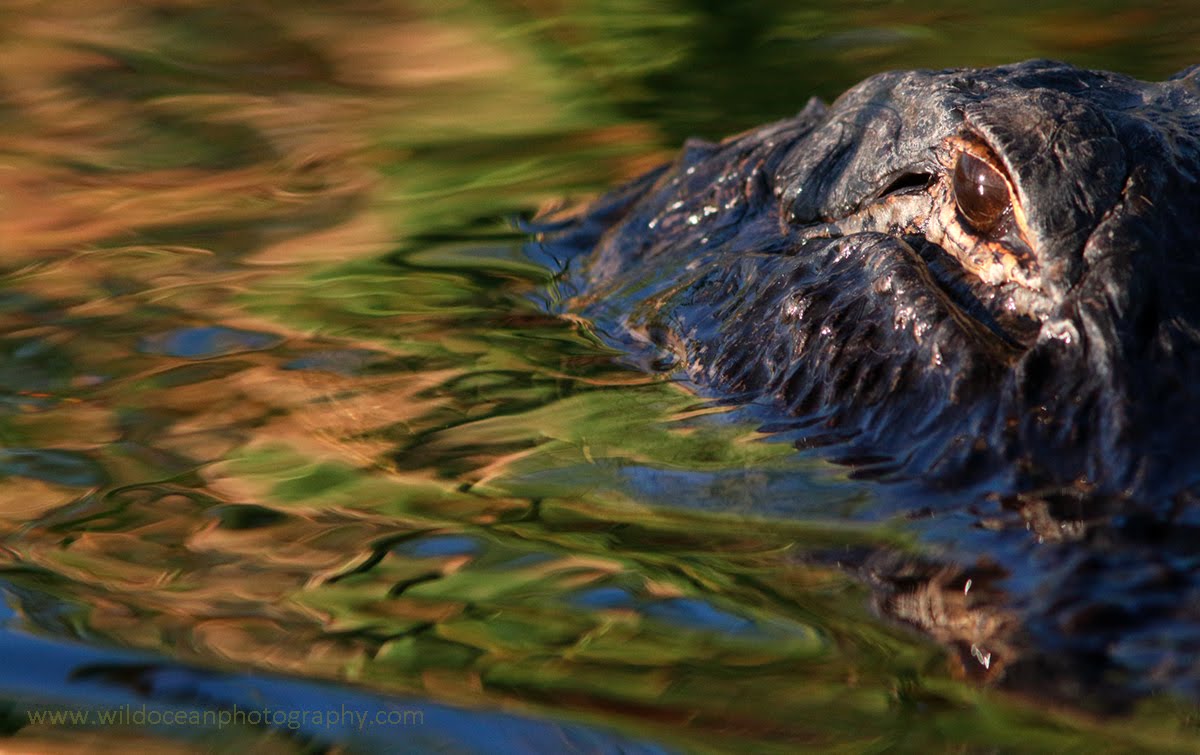
Reflections

Alligator portrait

Floating and watching

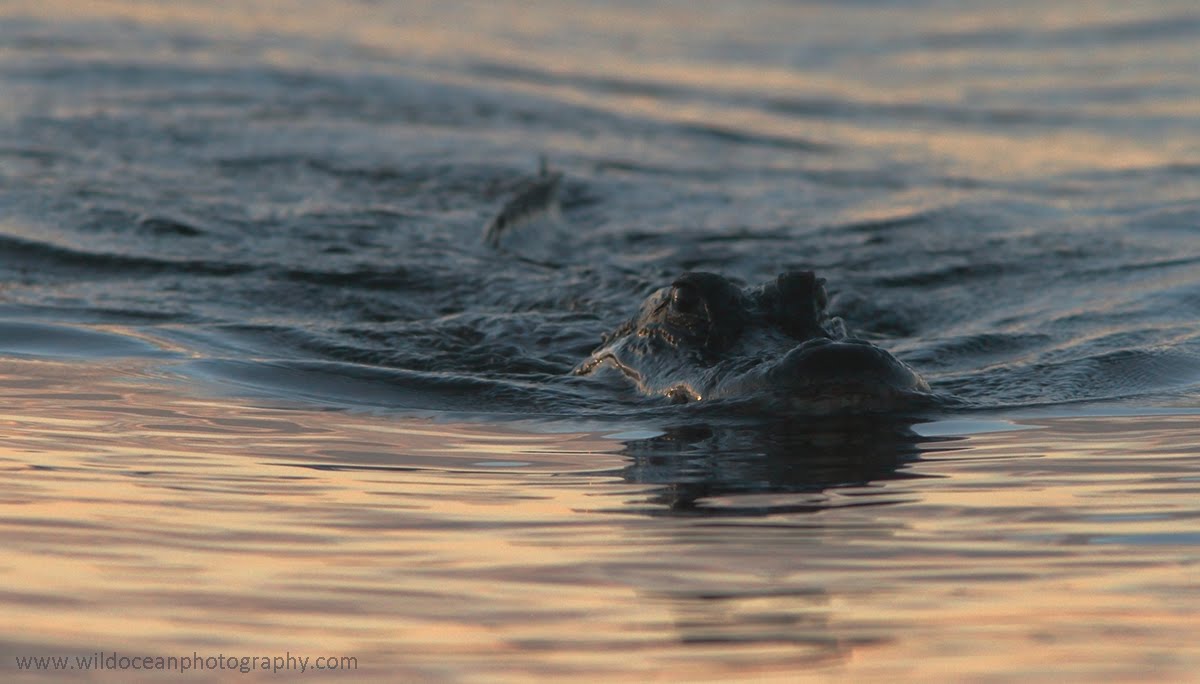
A small female alligator swimming towards us in the evening light

Sunday, 12 November 2017

Big Cypress in the Rain

We get a lot of rain in Florida. Usually, it's the type of rain that just dumps out of the sky for a few minutes and then passes, but occassionally we get a day that's just grey and wet for hours and refuses to let up. Kind of like Scotland except, you know, warm.


Little blue heron (adult)

Juvenile little blue heron

A woodpecker

A murder log (American alligator)
 
Still, I've always really liked rainy days for taking wildlife photos. The colours are richer, the days aren't so dazzlingly bright, and the animals all just look that bit more scunnered about everything!

Killdeer crossing

A black vulture

A mockingbird

Possibly a small warbler


These photos are from all the way back in January, and mark the first in a series of batches I'll be posting now I've had some free time to clear a bit of my backlog! I hope you enjoy them. As always, you can click on each image to see a larger version.

A juvenile blue heron.

Wednesday, 30 November 2016

Florida's Burrowing Owls

This weekend we took a trip over to the Brian Piccolo park; a well-manicured park in the middle of Cooper City (FL), which contains a multitude of sports grounds, a velodrome, and cycling tracks. It also contains a whole bunch of Burrowing Owls (Athene cunicularia) who, safe inside their carefully roped-off burrows, don't seem to give two hoots (yes, I'm hilarious) about passersby with cameras.

I honestly hadn't held out much hope of seeing these birds, but I'm starting to get the idea that wildlife sightings in the US are somewhat more reliable than back home, and an awful lot of the wildlife just doesn't care about random people wandering up to them. So, we had a very successful afternoon with the birds before the sun set! They have fantastically expressive little faces too which makes them brilliant subjects.

Burrowing owls make their homes in old rodent burrows, essentially making it a lazy version of the Atlantic puffin which actually digs its own burrow-nest.

Chilling on one leg

A few of the birds seemed to have the posing down to a fine art:

The all-the-way-over-the-shoulder runway pose.

Blue steel.

 Others had less composure:

OMG!

OMG I HAVE A BEAK!

OMG WHAT ARE YOU DOING!? 

The rest just seemed happy to relax and enjoy the evening:


Thursday, 25 June 2015

Whales!

Last night we were joined by a family group of pilot whales just as we were finishing dinner and preparing ourselves for our first night of seafloor sampling. Incidentally, running up and down two flights of stairs to get your camera after eating a large amount of lasagne and banana bread (separately, not at once!) is not an entirely pleasant experience!

A large pod of pilot whales popped by the ship yesterday.

Pilot whales in the waves

Pilot whales are funny beasts. They have a very lazy way of rolling through the water, which makes them a bit difficult to take interesting photographs of because they don't do much other than breathe and pootle about. The calves tend to be a lot more active and tend to leap around a bit more which is VERY cute to see if you can find a family group! 

Photobombing whale

Family of pilot whales

This pod had a couple of calves with them that still had visible foetal bands, meaning they must have been pretty new! We got really lucky with this group, and they stayed near the ship for about two hours. Most of the photos I took were of small black fins in the distance (as is typical of photographing whales and dolphins), but they did briefly come right up close to us and I got a few photos that were a bit more reasonable!


This pilot whale calf was so young the foetal bands were still visible on its flanks.

We've also been seeing a few shearwaters over the past couple of days. I'm not completely sure what species of they are, but I suspect they're Cory's shearwaters, though that's based mostly on the fact that I've seen them out here before and these ones look a bit similar. If anyone with a better internet connection than me can check and let me know it'd be much appreciated!

I think this is a Cory's Shearwater... Is that right?

Anyway, we've been put on night duty for our mud-coring work so I'm going to try and grab a couple of hours of sleep before dinner. See you next time!

Sunday, 14 June 2015

North Queensferry / Carlingnose Reserve

The Forth Rail (and road) bridge at North Queensferry, as seen from Carlingnose Reserve.

North Queensferry is probably best known for their stunning views of the Forth Rail Bridge, and possibly for the Deep Sea World aquarium (if you haven't been, it's VERY cool!) However, the Scottish Wildlife Trust also run a lovely little reserve at Carlingnose Point with views looking west over the Firth of Forth.  ... If you can find it that is!

North Queensferry (link to map)

We parked at a car park underneath the rail bridge, found a sign showing that we were not only in the right place, but a mere stone's throw away from the reserve. It then took us about an hour of wandering the town and scrambling unnecessarily over the boulder shore before we admitted defeat, went back to town and managed to find the path leading to it.

There was a lot of really interesting dried out pieces of driftwood along the shore.

Top tip: if you ever arrive looking for the reserve yourself, there are no signs in the town, but you'll find it if you follow the signs for the Fife Coastal Path and head away from the town (or away from the grey road bridge if that's easier).

Look for the Fife Coastal Path and follow it west. There are no signs for the Carlingnose Point Reserve in town that I could find. 

The reserve itself is in place to protect locally rare populations of wildflowers and plants, and the dense scrub provides a nice habitat for smaller birds as well but it's also a nice viewpoint to look for seabirds on the shore. We visited in May and only saw a couple of eider ducks, but it was a really sunny day and it's possible that the birds had all finished foraging early in the morning and headed away to roost by the time we arrived.

The reserve was small and pretty quiet on the day we visited, but the vast fields of gorse were stunning!

There's an old ruined pier just offshore that had a sleeping gull on it, but the wildlife was keeping fairly quiet on the day we visited.

An old ruined pier lies just offshore off the reserve.

Sunny afternoons are perfect for napping, no matter what species you are!

The reserve itself is pretty small, but if you follow the Fife Coastal Path, you'll be led down to a big sandy bay where you get some lovely views over the Firth of Forth.

Following the coastal path brings you to this beach which was covered in oyster shells.
A group of cormorants were out enjoying the sun on the edge of the shore too.

The beach was also covered in oyster shells, which is pretty unusual and the first time I can remember seeing any - especially in such large numbers!

Shells from what I think might be native oysters (Ostrea edulis). I included a 10 pence coin for scale, which has a diameter of roughly 25 mm.  

I suspect they're possibly native oysters (Ostrea edulis), but I'm not an expert on these animals. If anyone knows what these are, it'd be really interesting to know.

North Queensferry and the road and rail bridges over the Firth of Forth.

Back in the town, you will of course be treated to some stunning views of the road and rail bridges, but the town itself is beautiful and quite typical of a coastal Fife town so it's well worth saving a little time to look around the town and its harbour before you leave. It's sometimes also possible to see dolphins in the tidal races underneath the rail bridge, so they're worth looking out for too!

The new road bridge being constructed. 

This year (2015), they're also in the process of building a new bridge over the river and it's pretty cool just to see the scale of the engineering works that are happening just now.