My camera gear gets a pretty rough time when I take it out in the
field. If I’m not at the coast on sandy beaches or gloopy mudflats, I’m usually
out on a boat of some type in every kind of weather Scotland can come up with. From
2007 to 2010 I spent some time working with some of the trawl fishermen based
in the town of Stornoway to study the bycatch (any non-target species) in their
catches and to try and figure out ways to make the fishery more sustainable. As
a result, I’ve spent quite a lot of time at sea on a couple of the boats which,
although it’s been pretty challenging at times (largely depending on the
weather!), has also been an amazing opportunity to get up close to a huge
variety of Scotland’s marine life amongst some of the most gorgeous scenery in
the country!
The area I was working in is called the ‘North Minch’. The Minches
are the bodies of water that lie between the northern islands of the Outer
Hebrides (Lewis & Harris) and the Scottish mainland, and is approximately
the area shown in red on the map below. As with most of the Scottish west
coast, this region supports an extremely rich marine community and while I have
not yet had the chance to go diving here, the evidence for it from the surface
is clear from the numbers of seabirds and marine mammals we saw on each trip.
The trawls themselves also gave us a glimpse of some of the underwater life and
many of the images in the Marine Identification gallery are of animals caught in trawls from the Minch.
 |
Map showing approximate area of the North Minch
(Image from WikiMedia Commons)
|
The wildlife you could expect to see in the Minch, as with anywhere, varies throughout the year, and after two years and over 300 hours at sea out there, we were able to piece together a picture of the common species you may expect to see at sea around the Isles of Lewis and Harris over the course of a typical year. Hopefully if you ever visit the islands this will help give you some idea of the wildlife that is around, and that you may be able to see if you explore the coastline from either the land or the sea. Wildlife-spotting boat trips are available on Lewis as well, so you don’t need to brave the fishing boats to get out and see it all!
Spring
Springtime is definitely the season when the wildlife is beginning
to warm up in preparation for the summer. The seabirds begin to appear again in
force after the winter and the gannets always seemed particularly keen to
follow the fishing boats during the spring months, possibly because they
provided enough food to tide them over until the plankton bloom brings the
shoals of small fish in. Whatever the reason, the gannets were out in force
every spring we visited which made it that bit easier to get some good action
shots of them.
Gannets are one of my personal favourite birds to photograph, although it took a LONG time to finally get a series of diving shots that I could really be proud of.
 |
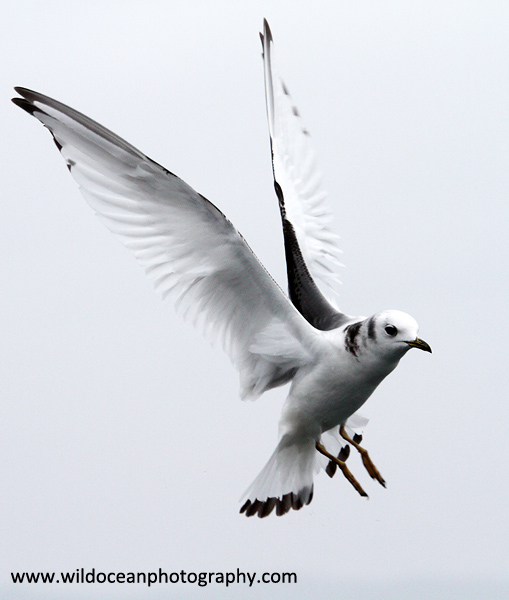
| A kittiwake displaying its winter plumage |
Kittiwakes were always close behind our boat, and many of the
young ones were still in their 1st winter plumage. Fulmars and several of the
larger species of seagull (like greater and lesser black-backed gulls and
herring gulls) were also common around the boats.
 |
| Gannets followed the trawlers in high numbers in the spring |
The weather in spring is still cold and the sea state can be fairly unpredictable this early in the year, although the Minches are somewhat notorious for their rough weather anyway! This did mean that it was generally more difficult to spot cetaceans (whales and dolphins) or seals – no doubt they were around, and we did occasionally catch a glimpse of the odd porpoise or get a visit from a scavenging grey seal, but they were fairly few and far between. If you’re looking for marine mammals, wait for the summer!
 |
| Grey seals occasionally made an appearance around the nets, but sightings outside the harbour were a rarity
|
The unpredictable weather did mean that we were land-bound on a
couple of days which gave us a chance to see some of the island and take in the
stunning white beaches and rocky coastlines that the Hebrides are famous for.
They are not called the ‘jewels of the sea’ for no reason, and a tour of the
coast is well worth it. As far as the coastal wildlife went, we saw dunlin,
ringed plovers, oystercatchers and a variety of gulls on the sandy shores,
along with colonies of fulmars and cormorants and shags on the rocky cliffs to
the north. And all that in just a few hours – a more thorough exploration would
undoubtedly throw up a lot more.
 |
| Rain coming in over Broad Bay (Isle of Lewis)
|
 |
| Ringed plover on the shore
|
Summer
Summer is probably the busiest time for wildlife and the best time
to visit if you are looking for a variety of species and relatively settled
weather (at least as settled as Scottish weather ever gets...!). Summer is really
the time to see cetaceans, and the Minch is full of them – on our various trips
we were lucky enough to see harbour porpoise, common and bottlenose dolphins
and minke whales, and we even saw a baby minke whale breaching clear of the
water right next to our boat in 2009! There was no chance of getting the camera
in time, but it was an amazing thing to see! Getting calm weather massively
improves your chances of seeing cetaceans so try and pick a settled day for it
if you can, though I’ve noticed that seabirds tend to prefer a bit of wind to
fly about in and tend to sit on the surface on calm days. If you’re after birds
in flight, a bit of a breeze is a good thing!
 |
| Common dolphins playing in the water around the boat.
|
The gannets, gulls, kittiwakes and fulmars are still around at
sea, although there appeared to be much more ‘natural’ food in the Minches
during our summer visits and the gannets, while still present at the trawlers,
were typically seen in far higher numbers feeding on baitballs along the coast.
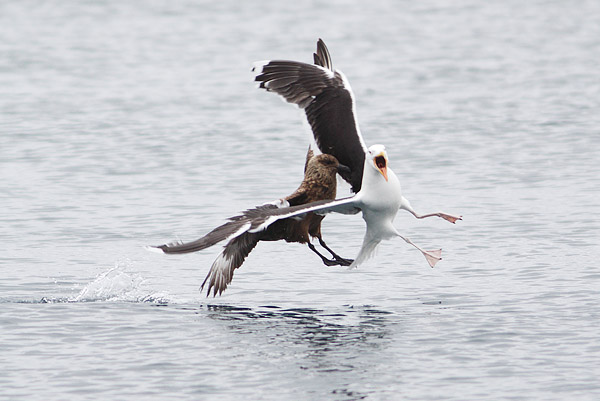
Summer is also the time to see great skuas which are summer visitors to Harris
and Lewis (and the Orkney and Shetland Isles). These are powerful birds which
are capable of attacking and bringing down birds as large as gannets in order
to steal food from them (a practice known as kleptoparasitism) or simply kill
them. While we were there in summer 2010 there were quite a few of these
encounters, some more grisly than others, but which made for pretty interesting
behaviour shots! We had rare sightings of various shearwaters as well, although
these birds often stayed too far away from us to identify clearly. These are
offshore birds which only return to their burrows on land during the summer
breeding season and at night, making them a fairly rare sighting unless you are
able to travel relatively far out to sea.
 |
| A great skua chasing down a gull.
|
 |
| A great skua in flight alongside our vessel.
|
 |
| A lesser black-backed gull coming in to land on the sea. |
As well as the large predatory and scavenging seabirds, many of
the smaller auks were also around, including puffins, guillemots, razorbills
and black guillemots. We saw the largest groups of these around the South
Shiant islands, which can be visited with some of the wildlife tour boats operating
from Lewis.
Autumn
As the autumn comes in, the weather begins to deteriorate again
and although it is not as cold as in spring, many of the seabirds start leaving
the area, particularly the puffins. Gannets did not seem to be around in such
high numbers as in the summer either, although the great skuas were still
present during one of our visits in September, as were small numbers of sooty
shearwaters. Unfortunately, the weather during our later trips was awful, and I
wasn’t able to shoot much. To be honest, I wasn’t able to do much of anything
on those days except count the minutes back to land!
 |
| A sooty shearwater resting alongside our vessel. |
Winter
 |
| A gull taking flight over a golden sea at dawn |
Winter in the Minch is freezing cold, dark for all but around
seven hours of the day and has a tendency to get quite stormy! Having said
that, it is a beautiful time of year to enjoy the scenery of the Hebrides and
the dawn light is wonderful. By this time many of the birds have moved on,
leaving mainly gulls and kittiwakes behind and a few cormorants. There are
herons in the harbour and town centre of Stornoway, and we also saw red-breasted
merganser in the harbour in February 2009. There is far more light in February
than in December once you get as far north as Lewis, and February is generally
good for photography if you can dress warmly enough!
 |
| Lighthouse at dawn travelling out of Stornoway harbour (taken around 8.30am) |
 |
| Young kittiwakes in their 1st winter plumage are a common sight at this time of year |
 |
| Dawn over the Scottish mainland. There are far worse sights to see as you start your day!
|
One place you should always check out though is the harbour, which
is home to a resident group of about 10-12 grey seals, which will come in and
feed on any discarded catches when the fishing boats come in each evening.
 |
| The grey seals in Stornoway harbour are quite happy to eat any waste fish the boats throw away |
Summary
I have no doubt that I have only seen a tiny amount of the marine
wildlife that lives on and around the Hebridean Islands, and I suspect it would
take a great many more visits to produce a comprehensive listing of everything
that lives there! However, hopefully this guide will be of some use if you are
planning a trip to the islands and want to see some of the wildlife for
yourself. If you would like more information or have any questions about any of
my sightings or photographs please don’t hesitate to get in touch at info@wildoceanphotography.com