Showing posts with label west coast. Show all posts

Wednesday, 11 March 2015

Troon Beaches & Harbour

Troon is a small town in Ayrshire on the west coast of Scotland, and is one of the places I try and get to with my camera at least two or three times a year. Aside from being conveniently close to Glasgow for a day trip, it is has a really varied coastline which makes it a great spot for photographing coastal birds.

Troon's beaches are conveniently close to Glasgow and Ayr.

Birds on the Beaches


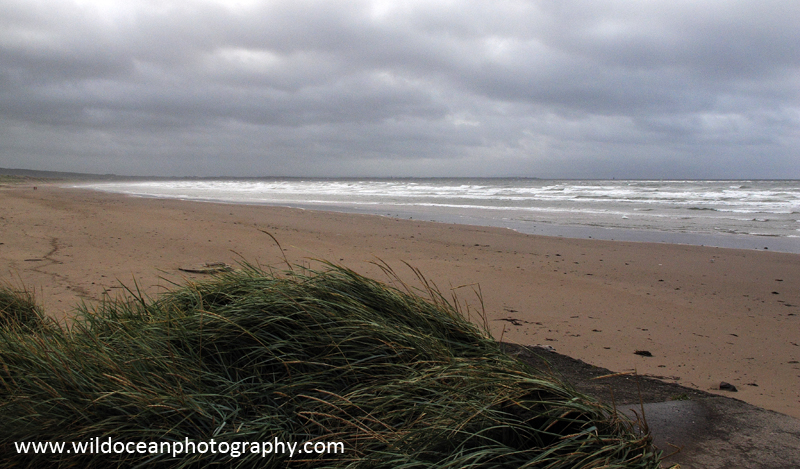
A windy day at one of Troon's beaches

The beaches around Troon are mainly sandy with smaller patches of bedrock. This combination of habitats means that you get a really nice mix of different birds along the coast. The sandy areas are used as feeding grounds by wading birds like curlew, oystercatchers and dunlin, while smaller species like plovers, redshank and turnstones can be spotted feeding in the seaweeds around the rocky areas.

Redshank are a common sight on the rockier places

Turnstones are also quite easy to find!

This pair of Dunlin were too busy foraging around the edges of a freshwater stream to worry about me an my camera.

These beaches are really popular with local dog walkers (for good reason!), so do bear that in mind before you head down. Most folk tend to stay towards the upper parts of the beach, but there's so much space there's plenty of room for everyone. It also means that most of the wildlife here is quite used to humans, and although they won't tend to let you walk right up to them, they are a bit more tolerant of disturbances than in other places and will settle down again fairly quickly.

The beaches are popular with dog walkers too

Obviously, that doesn't mean you get a free pass to cause a disturbance to the wildlife yourself! They are still wild animals, and it is our job as photographers and wildlife-watchers to make sure that we respect that and don't disturb them. As a general rule of thumb, you can tell quite easily when an animal has noticed you: that's a good time to stop approaching them.

Seascapes

The views over to Arran are gorgeous on nice days...

The views from Troon look out over to the Isle of Arran, which can provide a really nice backdrop for any seascapes you might want to try. Also, when the weather turns, it's quite easy to find cool bits of coastline close to the road, so you can get some stormy shots of the sea without having to stray too far from shelter!

... And really cool on the stormy days!

Troon Harbour 


Gulls annoying a grey seal.
While you're here, it's worth remembering that Troon has a working harbour that is used by a decent number of fishing boats that fish the Clyde for Langoustines, and where there are fishing boats, there are usually grey seals!

Eider ducks in the harbour at Troon.

Troon harbour is also a surprisingly good place for Eider Ducks, and there seems to be a large population of the birds living in and around the harbour! Unless you're able to visit a breeding colony (like the Farne Islands for example), I've always found eiders particularly difficult to approach, so the group at Troon was pretty exciting to find!

--------------------------------------

Like this? Why not check out some of my other Location Guides.

You can see these and many more of my photos over in the Wild Ocean Photography galleries

Tuesday, 3 March 2015

Great Cumbrae & Millport (Firth of Clyde)

The island of Great Cumbrae sits in the Firth of Clyde, approximately a 10 minute ferry ride from the seaside resort town of Largs on the mainland. Considering it is only about a 40-minute drive from Glasgow and given the proximity of large towns and ferry ports such as Greenock, Gourock and Ardrossan (not to mention Hunterston power stations!), a great part of the island's charm is that it still manages to feel as though it's miles away in the heart of the Scottish countryside. In addition, the island and its surrounding waters are a great place to see a huge variety of coastal marine wildlife from seabirds to seals.
Location of Great Cumbrae in the Firth of Clyde

Millport & the South of the Island

Students working on Kames Bay


In the town of Millport are two large sandy bays (Kames bay and Fintry Bay) which are popular spots for dog walkers and horse riders, which doesn't always make them most peaceful spots for wildlife watching. But, if it's quiet, it can be a decent place to look for waders and you'll get some beautiful views south towards Ailsa Craig if the weather's nice. From the harbour you can also get some cool views of the seal colony if you have your binoculars with you (or a long lens).

Rocky pools along the coast are great places to play around with your camera and find some cool marine life in the process!

Rocky beaches dominate the rest of the coast which are brilliant for rockpooling (particularly at White Bay in the north of the island).

Blue-rayed limpets can be found on the underside of kelp fronds if you look at low tide.

The marine life here is quite typical for a Scottish rocky shore, and all the usual species of green and brown seaweeds, limpets, barnacles, winkles, mussels and beadlet anemones can be found readily in the pools. Blue-rayed limpets are also commonly found on Kelp fronds in the sublittoral zone (only accessible at low tide). If you have a net and fancy a bit of pool-dipping, you can also often small crustaceans (e.g. shrimp and amphipods) and occasionally small fish in many of the rockpools here. There is an easy circular path around Farland point which makes it suitable for most people, though it can get a bit muddy.

Coastal birds and Seabirds

There are a huge variety of coastal birds and seabirds around Great Cumbrae, which a quick trip around the island will prove! Eider ducks are common around the entire coast, and can regularly be seen diving for food, or calling to each other in large groups, though I've never been particularly successful at approaching them on the island. For that, I tend to find that fishing harbours are a better place to photograph them, but you never know your luck.

A curlew on the shore.
Bar-tailed godwits foraging on the shore.
Oystercatchers on Cumbrae.


Oystercatchers and curlews are also extremely common, and can often be seen in large groups, either resting or feeding at the beaches, along with shags and cormorants, lapwings, and various waders such as turnstones, dunlin and redshanks.

Gulls on the shore.
A cormorant in flight.

I have generally seen these species most often along the western side of the island and the bays in the north, although I would expect them to be seen around most of the coast. In the north and north-west of the island there are also several Swan (or Chinese) geese, which are a domestic species and are not native to Scotland. Around the town of Millport itself, it is not uncommon to spot red-breasted mergansers, as well as all the usual gulls you would expect to find in a seaside town!

Gannets can be commonly seen out in the Clyde channel.

Several species of seabird also live on the island, including a small colony of Fulmars which live on the cliffs in the south of the island. Kittiwakes and gannets can also commonly be seen further out at sea. There is a large gannet colony at Ailsa Craig, south of the Firth of Clyde, and the waters around Millport are a popular feeding area for these birds in the summer (particularly when the fishing boats are working).

Marine Mammals and Basking Sharks


Porpoise feeding between the islands of Great and Little Cumbrae.
The Firth of Clyde is home to a large number of marine mammals, including large groups of harbour porpoise, common dolphins and common dolphins. Minke whales can also be seen in this area. In the past, there have also been sightings of Killer whales (Orca), a Risso's Dophin, and even a humpback whale! Sightings of these species are incredibly rare however, and are certainly the exception rather than the norm. Nonetheless, taking a pair of binoculars out to the coast with you could certainly be worthwhile. 

Grey seals hauled out opposite Millport harbour.
Around the coast of Great Cumbrae, it is quite common to spot common and grey seals. There's a small haul-out area for grey seals just opposite the main harbour in Millport, and if you have a pair of binoculars you should be able to spot them there quite easily.

The waters around Great Cumbrae are famous for basking sharks, not least because this was until very recently, the home of the last basking shark fishery in the UK. In 2005, the Firth of Clyde had the second highest sightings rate for basking sharks in Scotland (after the Minches).
To see more photographs like the ones in this article, have a look at the Seabirds, Coastal Wildlife and Marine Mammals galleries.

Saturday, 30 June 2012

Creel Fishing around the Scottish Coast

Every once in a while I like to skim back through my photo archives, looking for those images that I might have passed over or simply missed the first time around, to look at them again and to see if I can make anything out of them with a little bit of extra work.

Fishing boats moored up in the harbour at Kirkwall (Orkney Islands)

Last week I was reminded about a project I worked on during the summer of 2010 in which myself and a larger consortium examined the feasibility of different methods for monitoring inshore fish populations around Scottish coastal waters. Since I had a fair amount of experience of working with the fishing industry and conducting observer work by that point, I was asked to investigate the levels of fish bycatch that were being captured by the Scottish inshore creel (trap) fishermen, which ultimately ended up with myself and two of my colleagues (PhD student Kathy Dunlop and an undergraduate student Marie Fenton) embarking on a ten-day trip around virtually the entire Scottish coast, driving from Glasgow to Campbeltown, up to Skye (where we attemtped to camp for 3 days in a storm) then north to the north-east coast and up to the Orkney Isles, going out to sea with any fishermen who would allow us to observe them for a day and handing out questionnaires. It was slightly crazy, but a lot of fun!

A catch of brown crabs and the creels that caught them. The blue escape panels allow most of the undersize animals to leave the creels before they're hauled onto the boat.

Anyway, the results of that pilot study are available in the full report (freely available online here) if you're interested in the science that came out of the trial, but what I would like to share with you here are some of the photographs from that trip, with the emphasis very much on the fishermen and the catches rather than wildlife for a change! I usually tend to ignore photos that aren't strictly wildlife or animal-based when I do my first-pass edits so a lot of the more 'documentary' style shots get ignored, and this trip just happened to come at a chaotic period between finishing one job and starting a PhD so I've never really gone back to the photos again properly until now. When I went back through the images from this fishing trip I was really looking for images that stood out and told a story about the fishermen and their work rather than the wildlife and these are the best ones I think. I hope you enjoy them, and as always, I'd be keen to hear your thoughts on them, especially since this is not really an area of photography I've got much experience with!

NOTE: Some of the in-blog photos might look a bit odd because they've been resized automatically. To see the full-size versions (which are sharp) please click on the images.

Edible crabs and lobsters in a creel pot.

A fisherman working to empty and reset one of his langoustine creels


Lobsters boxed up and ready for sale to market. The pink bands stop them damaging each other with their claws.


Fishermen work quickly to empty and re-bait the creels so they can redeploy them for the next catch.

A fisherman working to empty and re-bait the creel.

A fisherman pulls a lobster out of one of his creels.

Fishermen working on their creels on a calm day in Orkney

A catch of lobster and brown crabs in a creel trap

Two fisherman working on their creels in the Small Isles (Eigg, Muck & Rhum)