Showing posts with label deep sea. Show all posts

Saturday, 20 May 2017

Surveying the deep Gulf of Mexico


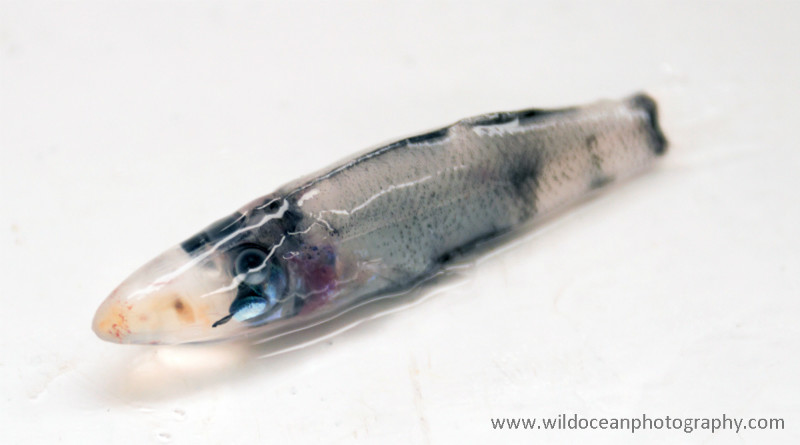
I have the coolest job!


Over the last couple of weeks I've been out at sea on a research cruise in the northern Gulf of Mexico to study the fishes that live in the deep pelagic realm. The pelagic ocean really includes everything above the seafloor and offshore from the coast, but my interest for now is in the animals that live far offshore, at depths down to 1500 m.

Hell, even the coolest alien in cinema was inspired by the deep oceans. This is Phronima in the home it carved from a salp, and it was the inspiration for the xenomorph in Alien movie. 

Every single fish that lives in the open ocean lives in an environment with no hard surfaces at all. For their entire lives, a pelagic fish's experience of the environment is defined in gradients of temperature, light, food and water currents. They live surrounded by the bioluminescent flashes of other animals; they may eventually find a mate, or they may end up as a meal for one of the many fish-eating predators that lie in wait for them in the darkness. Many of the fish that live in the deep-pelagic ocean live short, but fascinating, lives.

I've been working on deep-sea fishes for a while now. My PhD research involved trying to work out how the large deep-sea fish that live across the seafloor are distributed in different places and why. Now, I'm trying to work out where fish live in the deep in the water column and why, using a unique long-term dataset from the northern Gulf of Mexico (check out the DEEPEND website for more info). Of course, species names in a database don't mean a great deal on their own, so going out on this cruise gave me my first chance to put a few fresh faces to some long and hard-to-pronounce names. And there were certainly some memorable faces...

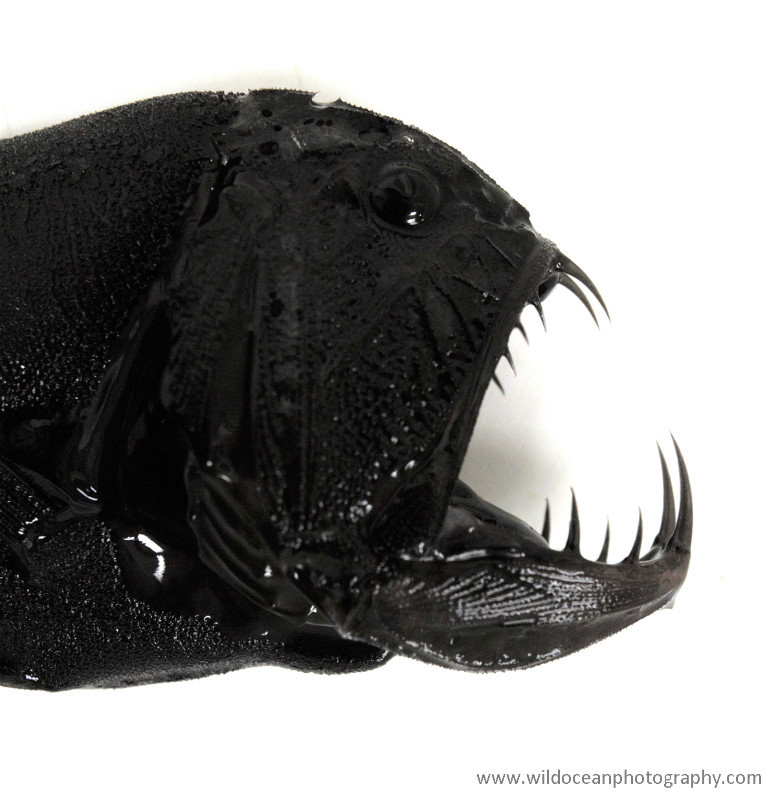
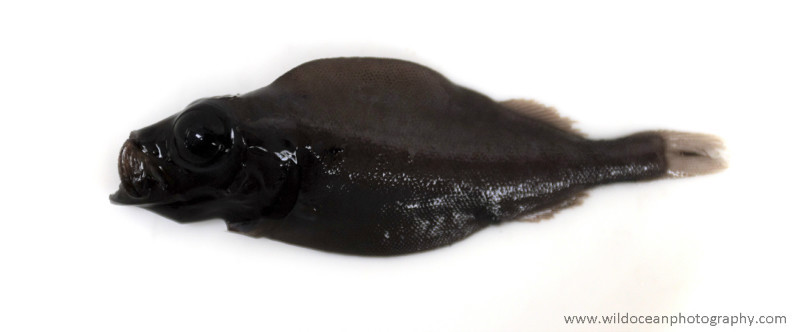
This is a fangtooth. How it got its name is truly one of the world's great mysteries.

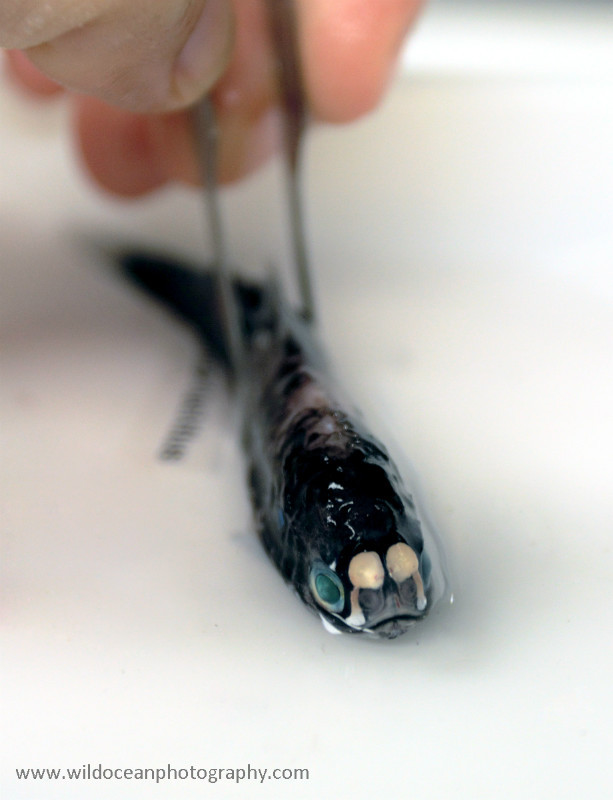
Lanternfishes have the ability to produce light on their faces to help them spot prey

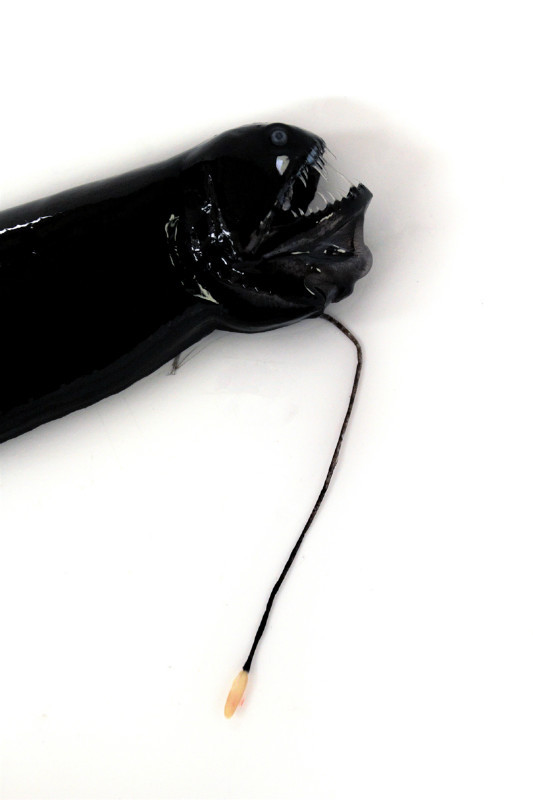
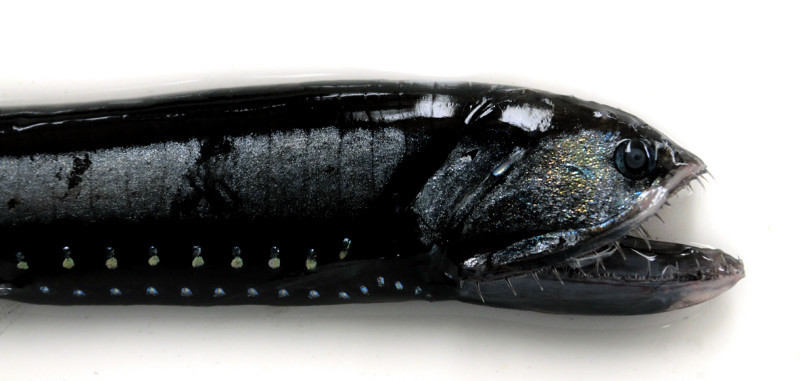
A dragonfish with its long, glowing lure for attracting prey and "headlights" on its cheeks for spotting prey

As cool and weird as these animals are, all the work we're doing out here has a serious purpose. Over the last decade or so, deep pelagic research has had a bit of a resurgence. While the deep-pelagic realm is probably one of the least understood anywhere on Earth, the more we learn about it, the more important it seems to be; and sometimes in surprising ways. For example, many deep-pelagic animals (like the lanternfishes for example) migrate to the surface waters every night to feed on microscopic animals (zooplankton), and in doing so, actually move huge quantities of carbon away from the surface ocean (where it could be released to the atmosphere again as carbon dioxide) and into the deep oceans (where it can be stored for up to 1000 years!). Since high levels of atmospheric carbon dioxide are one of the primary causes of our current global warming problem, it's easy to see how deep-pelagic fishes could be incredibly important animals for us to learn more about.

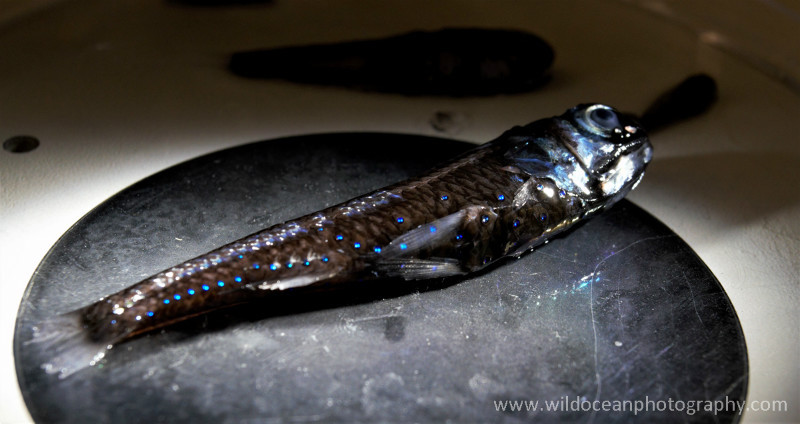
Many lanternfishes have light-producing organs along their bodies. This fish was still glowing when we brought it on board!

These strange-looking "bristlemouth" fishes (Cyclothone spp.) are the most abundant vertebrates on Earth.

Of course, as with most of the deep sea, we have plenty of questions to ask and not a lot of data to answer them with. This makes the catches we're collecting through DEEPEND all the more valuable and gives us a huge opportunity to start digging into some cool and really fundamental questions (like "what even lives down there and how?" and "why do deep-sea fishes live where they do?"), as well as some really complex ones (like "how will future human activities affect how deep-sea ecosystems work?"). Trying to find sensible answers to these sorts of questions is what I do when I'm back in the office. For now though, I'll leave you with a few more photos of some of the stranger fish we caught!

Barreleye fishes like this one have eyes that can see upwards and sideways at the same time! This is a glasshead barreleye (Rhynchohyalus natalensis).

This is a "Tubeshoulder" fish (Platytroctes apus). These have little tubes on their shoulders that they can use to shoot bioluminescent fluid out of, presumably as a defense mechanism.
A predatory bristlemouth (Sigmops elongatus). They have light organs along their belly for camouflage and a rather impressive set of teeth to eat things with!

Those of you who have been following my Facebook and Twitter will already have had a bit of a sneak preview of the other photos I took while I was out on the ship, but in case you haven't seen them, most of the photographs of the deep-sea animals are now also online on the website in the Deep Sea part of my "Specimen Photography" gallery.

Monday, 11 January 2016

5 Days Until the Big Move (and my 5 favourite photographs)...

Happy New Year!

So this year is promising a whole host of new things for me. Back in October last year, I was offered an awesome post-doctorate job which will see me spending the next 2 years of my life right next to sunny Fort Lauderdale, Florida! I'll be joining the DEEPEND project to study how communities of pelagic organisms (stuff that lives in the water column rather than on the seabed) in the Gulf of Mexico vary over time and space in response to changing environmental conditions. It's pretty cool, and signals a definite increase in the number of teeny tiny sea monsters I'll be meeting in the immediate future!

What's not to love about that slimy wee face?

Anyway, although I'll definitely be continuing with the photography when I get to Florida (because holy moly is there a LOT of wildlife out there!), I thought I'd round out my last week in Scotland by sharing five of my favourite photographs with you. These aren't photographs that I think are the "best" from a technical or compositional standpoint, but they're the ones that mean a lot to me because they captured a particularly special moment in time.

So without further ado, here comes my first favourite photo...

Tuesday, 23 June 2015

To the Abyss (again!)

It's nice to be back at sea!
 
Last Friday, I left Glasgow with one of my fish-ecologist colleagues to join the RRS Discovery for another cruise to the Porcupine Abyssal Plain (PAP) long-term survey site. This is my fourth trip out to the PAP in as many years now, and I must admit it's really nice to be back on a ship! 

Me and Jo, ready to sail!

Leaving a wet and rainy Liverpool

The main purpose of this particular cruise is to service the PAP monitoring buoy and download the data that it's been collecting for the past year. This includes oceanographic data (e.g. current speed, water temperature, salinity), as well as collections of the sinking particles of dead organisms, biological waste and other organic and inorganic materials that make up the "marine snow" which fuels the vast majority of deep-sea ecosystems.

The Porcupine Abyssal Plain (PAP) study site is about 300 miles south-west of Ireland

Recoving the PAP buoy in 2013

Taking a ship 300 miles offshore is not a simple (or cheap!) task however, and there's no point coming all the way out here just to service a buoy and go home again so we've got a full contingent of scientists ready to make the most of the opportunity to collect their own data from the PAP site. On this particular cruise, we've got teams who are interested in understanding how mid-water bacterial processes and communities are influenced by "marine snow" particles, as well as researchers who will be studying the plankton communities and oceanography of the site. We even have a couple of holographic cameras which can automatically assess the sizes of all the particles in a tiny patch of seawater and rebuild an image of them all! 

Some photos from the last time I was out here to fish in the abyss. Hopefully this time we'll catch even more!
 
As exciting as the midwater research is though, I am here with Jo Clarke from Glasgow University to go fishing! We're working with the "benthic" (seafloor) ecologists from NOC to help collect deep-water animals from the seabed using mud cores, grabs and a trawl. We're really here for the fish, so we're mainly interested in the fish samples, and are here to make sure that they get identified, processed and recorded correctly for any future work that might be done on them. We'll also be helping out with all the other benthic sampling that needs to be done which will largely involve dealing with a lot of mud!

Sieving mud samples isn't so bad really!

The megacorer is one of the standard sampling gears for getting good quality sediment and animal samples back from the seabed. We'll be seeing a lot of it over the next few days!


So far we've had a pretty quiet start to the cruise. We met the ship in Liverpool and then spent a couple of days steaming south to Falmouth so some repairs could be done to one of the ship's thrusters while we were still near the coast. Happily that all went well, and we reached Falmouth just after midnight on Sunday for a mini crew-swap before starting our voyage to the PAP site. We should arrive there tomorrow, ready to start working!

Wednesday, 1 May 2013

New Deep Sea Gallery on Wild Ocean Photography

Good morning all!

Black coral from 800m

Now I'm back on land after a very muddy two weeks away, I've had a chance to update the website a little bit and have added a new 'Deep Sea Animals' gallery to the Marine ID section. You can check it out here:

http://www.wildoceanphotography.com/deep-sea-animals

And let me know what you think in the comments section below.

A polychaete worm living on a cold-water coral.


Thursday, 18 April 2013

Stormy Weather!


Guess where our study site is? I'll give you a clue - it's under where the red bit's going

Well, it’s been five days at sea now, and so far we’ve spent most of that time steaming towards our survey site at the Porcupine Abyssal Plain (PAP) and then bravely running away again! In fairness, the forecast has had Force 11s right over where we want to be working and since those are neither comfortable nor safe conditions to be attempting to launch and recover hundreds of kilos of equipment in, we opted to pick up a monitoring buoy from a nearby site instead and then try and sneak back to our survey site around the back of the weather. The headwinds mean we can only do around 4 knots at the moment (about walking pace) so it’s looking like it’ll be Friday before we can start work at the PAP properly – keep your fingers crossed that we manage to get the fishing gear in the water before we have to come home again!


It's always good value when the sea is actively trying to get in your cabin!
 
The sun came out today so I took a break from working on PhD stuff in my cabin to try and take a few photos of the gales we’re trying to push through. I’ve got a few videos which show the size of the swell a lot better, but with the restricted internet you’re not going to get to see those until we get back to land! Still, at least we’re not out here in a sailing ship...

A square-rigger we passed yesterday evening. Anyone know what it might be?

Other than occasionally popping outside to admire the weather, I’ve been working on some of the photos from last year’s cruise to the PAP site when we had the AUV with us, and there are some pretty cool images of the fish:

Abyssal fish from last year's cruise - hopefully we'll get to see a few for real when we start fishing

With a bit of luck we’ll get to see a few of these in the flesh if we manage to get the fishing nets in the water this week!

Thursday, 11 April 2013

I'm on a boat...

After a rather hectic weekend of data processing and frantic presentation-writing in time for a meeting yesterday, it's now time to pack up my rigger boots again and head to Southampton for another two weeks at sea for what is likely to be my very last cruise as part of my PhD.

Mud and muddy animals! Yeah! 

This time, we're heading back out to the Porcupine Abyssal Plain to learn how to trawl for sample in deep-water! I've done a similar trip before, but the guys who knew all the details of how to work the gear and get it properly set up are starting to leave or retire now, so there's a bunch of us heading offshore to gather as much knowledge as we can (and hopefully catch some interesting things while we're out there too!).

An abyssal grenadier almost 5000m down

As well as a lot of mud-sampling (it just wouldn't be a trip to the abyss without it!), we'll be conducting at least two seabed trawls and hoping to collect another batch of samples to add to the long-term dataset which has been being collected at the PAP site since the early 1980s to track temporal changes in abyssal animals over the course of several decades to improve our understanding of the fragility of those systems. As always, I'll be on the lookout for fish specimens to bring back with me, and will of course keep you posted on our progress as we go. Keep your fingers crossed for us getting good weather!


Friday, 29 March 2013

Friday of Interesting News: 29th March 2013

Sorry for the short break in news posts over the last couple of weeks, my life has become a bit of a rollercoaster with regards to the amount of work to do and time I have to do it in... However, we are back today with another week's worth of exciting news from the marine world. Do enjoy!

Wild Ocean Photography
It's been a busy wee week on the blog, with a new series of Dive Site guides started up and another new addition to the 'How to...' photography guide series:


The Deep Sea


Sea Beasts

Human Impacts & Sustainability


Other News

Monday, 11 June 2012

The sun is back!

We left Rockall Bank a couple of days ago and steamed back inshore (past foggy Rockall!) to a new site at the Hebridean Terrace Seamount which is about 50 miles or so west of the Outer Hebrides where we've been conducting a short survey for JNCC. Underwater the site looks pretty cool, with some impressive cliffs sticking up from the seabed and it looks like a completely different set of fish as well. It's not going to be possible to tell whether the differences are caused by depth (the seamount is much deeper than our previous sites, at 1200-1800m compared to 800m) or by the different habitat, but it's very interesting to see.

Unfortunately, the surface is less exciting and we've had barely any sightings of anything since we got here. Even our entourage of fulmars and gulls has left us now, so I've spent much of the weekend wondering what the hell to talk about today. In true British style, it turns out I'm going to rely on that old classic: the weather!

Well not really, but just enough to say that the clouds finally lifted last night and we were treated to the first clear(ish) sunset in almost two weeks which brought out the scientists and their cameras!

Sunset over the north-east Atlantic 

Watching the sun go down

Some silhouettes work out better than others!

See you on Wednesday for the last blog I'll make from JC073!

Saturday, 9 June 2012

Rockall in the Fog

Well, we steamed past Rockall itself last night and I thought you might like to see it:

Can you spot it?


No?

Let me photoshop that for you.
So, seeing Rockall in the fog was probably not the most spectacular way to see it, but it was definitely there, with breaking waves and everything! It's pretty amazing to think that anyone actually managed to stay on that rock for any amount of time, but it has been done!

In some other news, some more photos have gone up over at the official cruise blog, and you can check out those galleries for some photos from the ROV and a few of mine which are up in the Week 3 Gallery.

Thanks also to Dom and Rick who identified those mystery birds as a Pomarine Skua, Arctic Skua and Blue Fulmar (which is an alternative colour morph, not a different species).

Have a good weekend, and see you on Monday!

Wednesday, 6 June 2012

Squishing cups at 800m!


Well, we got one day out of the ROV at least before the weather turned lumpy again and we had to put the work on hold again. It’s unclear what we’re going to do for the last week of the cruise, since the weather forecast and the sea state are both changing so rapidly it’s difficult to know what the best decision will be to get the most out of our last few remaining days.

Between writing my cruise report and working on my thesis, I’ve got plenty to be getting on with, so having a bit of time to really focus on writing and analysis is great for catching up on some things. Of course, being disconnected from constant Facebook access means that we have to come up with slightly more creative ways to get distracted from working, and with deep-sea work going on, that generally means decorating polystyrene cups and sending them down to the seabed to be squished by the pressure. Interestingly, the ones we're sending to 800m are about the same size as the ones we sent to 4800m last year, which makes me wonder what the minimum depth is for maximum squashed-ness... My science-sense is tingling and I can sense an experiment coming on! Anyway, here’s a few I made earlier:


Teeny weeny squished cups
In wildlife news, there hasn’t been much change really. The gannets, fulmars, kittiwakes, gulls and skuas are still following us around, but the gannets still haven’t been diving for us and it’s been too rough for successful whale spotting.

Fulmars run over the surface of  the sea before they take off, leaving little footprints in the water!
I did see my first ever Arctic skua yesterday though as it swooped by the ship! At least, I think it’s an arctic skua.... It’s a pretty terrible photo, but I’m going to share it anyway.

The first Arctic skua I've ever seen (I think!()


Thursday, 31 May 2012

Rain? Time to get the macro lens out!

Well, it’s a rainy grey day out here in the middle of the sea, which actually makes a really nice change from the sunshine (yes I’m Scottish, yes I miss rain!), but as much as I enjoy shooting in the rain, with everyone hiding inside on their laptops and the wildlife pretty subdued it seemed a good time to get out the macro lens and try some specimen shots.

 Even the fulmars looked fed up with the weather

In order to get decent quality images of the animals we’re collecting with the ROV and the boxcores, I brought along a little 10L aquarium tank, a big strip of black cotton to surround it with and a couple of sheets of 2mm plexiglass to act as a sort of clear shelf inside the tank to support the animals (thanks to Millie Sharkey at Bristol Uni for her advice on the setup!). We set it up tonight in one of the outdoor labs and immediately entered into a bitter battle against the constant condensation forming on the glass... Once the cold room empties out a bit I’ll need to try and grab a space in there, but I’ll need to wait for the science to get done first.

I’ve only got one flashgun with me, so unless I can find some other sort of torch or waterproof lamp, I’ll be going for the side-lit look!  Anyway, here’s a few first attempts:


 An antipatharian (black coral)
 
Close-up of the black coral polyps

The underside and mouth of a pencil urchin

 
Lophelia coral (polyps retracted)

So it’s an all right start I think! Some of these have had a bit of work done to them in Photoshop to remove reflections from the glass and particles from the water, but otherwise they’ve only had the usual contrast and sharpening. If anyone has any handy tips for improving the lighting on these though I'd be really grateful! Chances are we're only going to have the one light source, but we can probably build more or less anything we need.

Friday, 25 May 2012

Deep-Sea Science at the Outer Hebrides

So, after spending two years of my life working on the Isle of Lewis looking at fisheries bycatch I’m back in the Hebrides again doing deep-sea research. This time around we’re here for one week of a four week cruise investigating the effects of global climate change and ocean acidification on the cold-water coral Lophelia pertusa (yes, Scotland has its very own coral reefs!). Or at least, that’s what everyone else is studying – my interest in this cruise is to collect video transect data from the Remotely Operated Vehicle (ROV) and use that to look at how fish use the reefs and surrounding areas as habitat.

The James Cook docked in Glasgow

Looking out from the JC bridge deck down the Clyde

Sunset over the Hebrides

So far things have been going pretty well, and it's been crazy busy with collecting samples, hosting a BBC film crew and school group from Benecula and dealing with the constant stream of video files coming out of the ROV! We had a few teething problems with the ROV during the first couple of days of the cruise, but they seem to have been more or less sorted out and we’ve been able to conduct some good long dives for sample collection and filming plenty of video footage for me to go through when we’re all back on land! I can’t put up any of the underwater images as yet since they belong to the cruise, but we should be putting a few up on the official cruise blog some time soon. In the meantime, I can share some of the surface shots of the gear we’re using.

This is our ROV and the most important (and expensive) piece of gear we have. With this we're able to collect precise samples, film everything we see underwater and even conduct experiments on the seabed.

Recovering the box corer. This piece of kit goes down on a winch cable and activates when it hits the bottom forcing the scoops closed and (hopefully) bringing us back up a big box of mud!

We did some maintenance work today as well for one of the long-term monitoring stations out here. This is the team preparing to put everything back.

As far as the wildlife goes, it’s been fairly quiet around the ship so far with relatively few sightings (which is a bit surprising considering that the perfectly calm weather we’ve been having is ideal for whale and dolphin spotting). Still, we have seen a few common dolphins and were visited by a basking shark a couple of evenings ago which was very cool!

Basking shark off Mingulay

I’ve been experimenting with taking some video footage with the 7D too, and I’ve got a few nice clips which I’ll get up online when I get home. Sadly the internet connection out here is far too limited to allow any kind of video upload, but to be honest we’re pretty lucky to get anything at all so I’m not complaining. We’ve also got a new mascot on board which doesn’t seem to want to leave the ship and has been here for about 3 days...

Anyone recognise this pigeon? It's still on board...

Anyway, we’re heading offshore now so the next update will be from the middle of the Rockall Trough (that’s about 200 miles west of Scotland).

The last land we'll see for 3 weeks. Could definitely be worse!