Showing posts with label marine biology. Show all posts

Saturday, 20 May 2017

Surveying the deep Gulf of Mexico


I have the coolest job!


Over the last couple of weeks I've been out at sea on a research cruise in the northern Gulf of Mexico to study the fishes that live in the deep pelagic realm. The pelagic ocean really includes everything above the seafloor and offshore from the coast, but my interest for now is in the animals that live far offshore, at depths down to 1500 m.

Hell, even the coolest alien in cinema was inspired by the deep oceans. This is Phronima in the home it carved from a salp, and it was the inspiration for the xenomorph in Alien movie. 

Every single fish that lives in the open ocean lives in an environment with no hard surfaces at all. For their entire lives, a pelagic fish's experience of the environment is defined in gradients of temperature, light, food and water currents. They live surrounded by the bioluminescent flashes of other animals; they may eventually find a mate, or they may end up as a meal for one of the many fish-eating predators that lie in wait for them in the darkness. Many of the fish that live in the deep-pelagic ocean live short, but fascinating, lives.

I've been working on deep-sea fishes for a while now. My PhD research involved trying to work out how the large deep-sea fish that live across the seafloor are distributed in different places and why. Now, I'm trying to work out where fish live in the deep in the water column and why, using a unique long-term dataset from the northern Gulf of Mexico (check out the DEEPEND website for more info). Of course, species names in a database don't mean a great deal on their own, so going out on this cruise gave me my first chance to put a few fresh faces to some long and hard-to-pronounce names. And there were certainly some memorable faces...

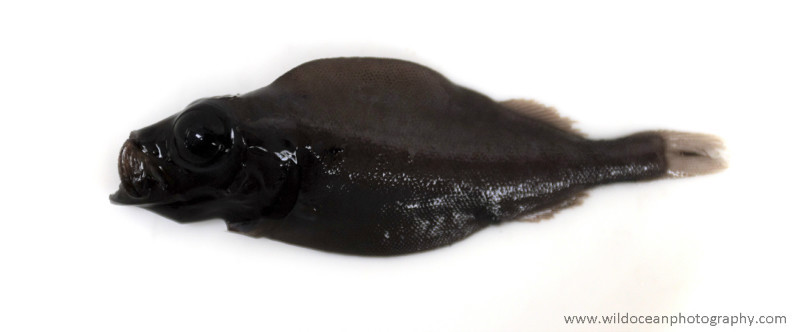
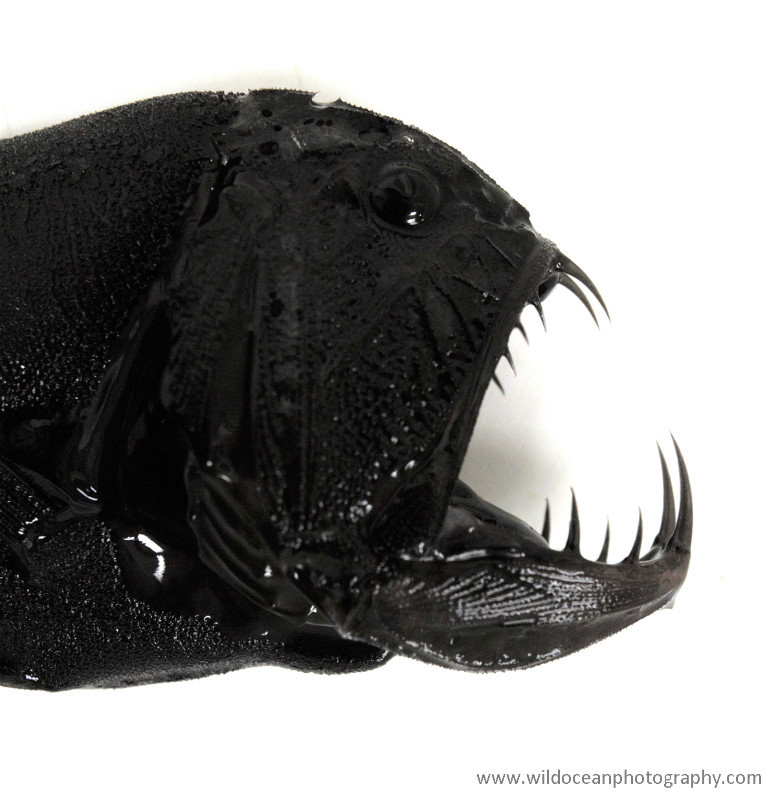
This is a fangtooth. How it got its name is truly one of the world's great mysteries.

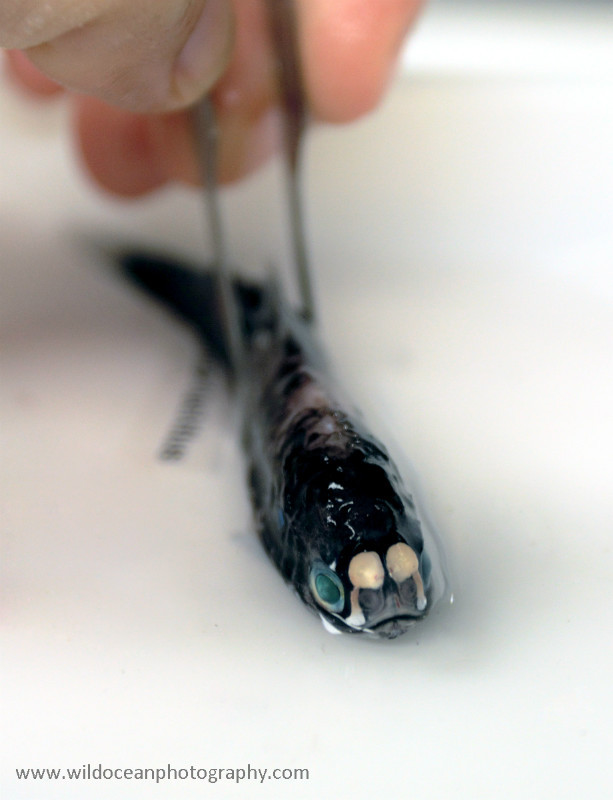
Lanternfishes have the ability to produce light on their faces to help them spot prey

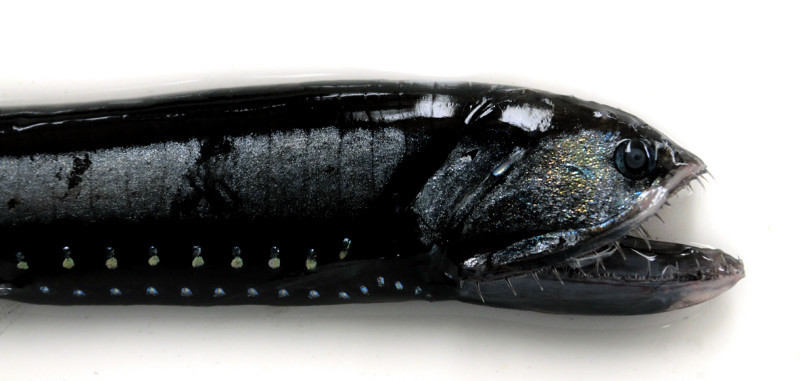
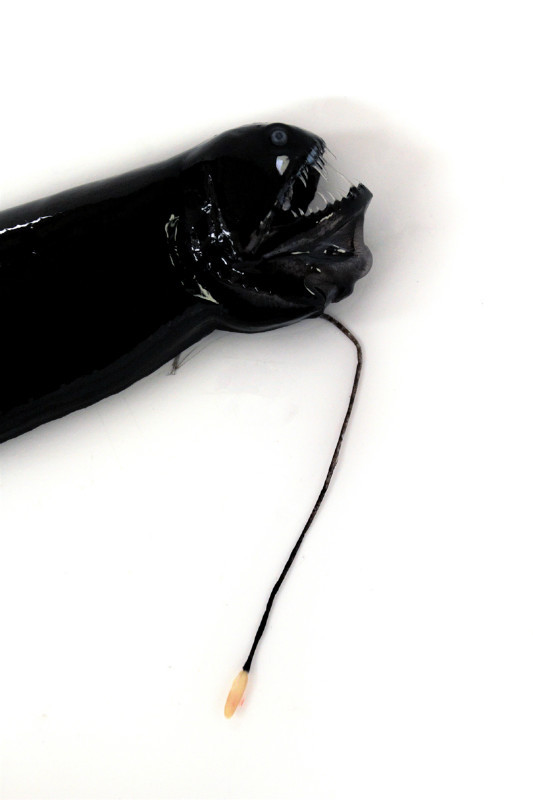
A dragonfish with its long, glowing lure for attracting prey and "headlights" on its cheeks for spotting prey

As cool and weird as these animals are, all the work we're doing out here has a serious purpose. Over the last decade or so, deep pelagic research has had a bit of a resurgence. While the deep-pelagic realm is probably one of the least understood anywhere on Earth, the more we learn about it, the more important it seems to be; and sometimes in surprising ways. For example, many deep-pelagic animals (like the lanternfishes for example) migrate to the surface waters every night to feed on microscopic animals (zooplankton), and in doing so, actually move huge quantities of carbon away from the surface ocean (where it could be released to the atmosphere again as carbon dioxide) and into the deep oceans (where it can be stored for up to 1000 years!). Since high levels of atmospheric carbon dioxide are one of the primary causes of our current global warming problem, it's easy to see how deep-pelagic fishes could be incredibly important animals for us to learn more about.

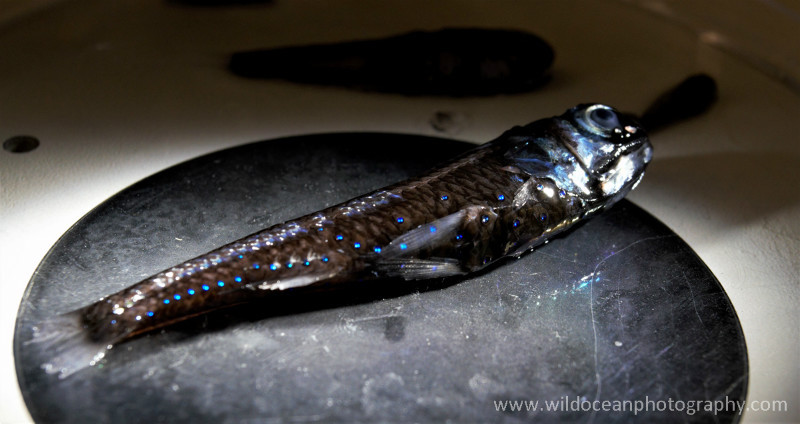
Many lanternfishes have light-producing organs along their bodies. This fish was still glowing when we brought it on board!

These strange-looking "bristlemouth" fishes (Cyclothone spp.) are the most abundant vertebrates on Earth.

Of course, as with most of the deep sea, we have plenty of questions to ask and not a lot of data to answer them with. This makes the catches we're collecting through DEEPEND all the more valuable and gives us a huge opportunity to start digging into some cool and really fundamental questions (like "what even lives down there and how?" and "why do deep-sea fishes live where they do?"), as well as some really complex ones (like "how will future human activities affect how deep-sea ecosystems work?"). Trying to find sensible answers to these sorts of questions is what I do when I'm back in the office. For now though, I'll leave you with a few more photos of some of the stranger fish we caught!

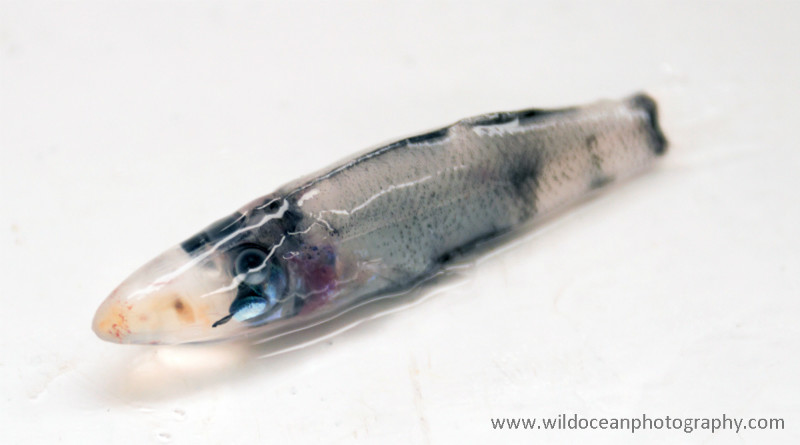
Barreleye fishes like this one have eyes that can see upwards and sideways at the same time! This is a glasshead barreleye (Rhynchohyalus natalensis).

This is a "Tubeshoulder" fish (Platytroctes apus). These have little tubes on their shoulders that they can use to shoot bioluminescent fluid out of, presumably as a defense mechanism.
A predatory bristlemouth (Sigmops elongatus). They have light organs along their belly for camouflage and a rather impressive set of teeth to eat things with!

Those of you who have been following my Facebook and Twitter will already have had a bit of a sneak preview of the other photos I took while I was out on the ship, but in case you haven't seen them, most of the photographs of the deep-sea animals are now also online on the website in the Deep Sea part of my "Specimen Photography" gallery.

Wednesday, 24 June 2015

There's dolphins off the starboard bow!

As I mentioned in the last blog, we had to spend a couple of days travelling from Liverpool to Falmouth at the start of our cruise so that we could fix a problem with the ship (which went smoothly) and then transfer our remaining scientists on board ready to get to work. Because our research site is 300 km offshore, we tend not to see too much in terms of wildlife once we get over deep water so the extra time spent off the Welsh coast provided some nice opportunities for wildlife-spotting!

Hello down there!

We had really nice sightings of most of the usual suspects: kittiwakes, gulls, gannets and fulmars were the most common birds, as you'd expect really, but because we were a little further offshore we also had a few sightings of Manx shearwaters which was really nice. Shearwaters and petrels live almost entirely at sea (usually quite far offshore), and only come to shore to breed in burrows (a bit like puffins). Unfortunately, when they come ashore they're also nocturnal, which means your chances of seeing them are pretty small most of the time. I can't pretend I got any decent photos of them, but they are always nice to see!

A crappy photo of a distant Manx shearwater

We were also joined by a small pod of common dolphins en route, which looked like they had a calf or two with them. They didn't stay with us for too long, but they were bouncing around enough to grab a few shots! I've never had a great deal of luck photographing these guys because they move around so fast, but I'm pretty pleased with how these photos came out.

Common dolphins under a wave

 
Common dolphin
A small group of common dolphins leaping

Common dolphins

Oh - and we also briefly had a couple of stowaways with us too! They seem to have left us at Falmouth though so we won't be adopting them as cruise mascots!

A couple of racing pigeons briefly stowed away with us for a trip to Falmouth.

Tuesday, 23 June 2015

To the Abyss (again!)

It's nice to be back at sea!
 
Last Friday, I left Glasgow with one of my fish-ecologist colleagues to join the RRS Discovery for another cruise to the Porcupine Abyssal Plain (PAP) long-term survey site. This is my fourth trip out to the PAP in as many years now, and I must admit it's really nice to be back on a ship! 

Me and Jo, ready to sail!

Leaving a wet and rainy Liverpool

The main purpose of this particular cruise is to service the PAP monitoring buoy and download the data that it's been collecting for the past year. This includes oceanographic data (e.g. current speed, water temperature, salinity), as well as collections of the sinking particles of dead organisms, biological waste and other organic and inorganic materials that make up the "marine snow" which fuels the vast majority of deep-sea ecosystems.

The Porcupine Abyssal Plain (PAP) study site is about 300 miles south-west of Ireland

Recoving the PAP buoy in 2013

Taking a ship 300 miles offshore is not a simple (or cheap!) task however, and there's no point coming all the way out here just to service a buoy and go home again so we've got a full contingent of scientists ready to make the most of the opportunity to collect their own data from the PAP site. On this particular cruise, we've got teams who are interested in understanding how mid-water bacterial processes and communities are influenced by "marine snow" particles, as well as researchers who will be studying the plankton communities and oceanography of the site. We even have a couple of holographic cameras which can automatically assess the sizes of all the particles in a tiny patch of seawater and rebuild an image of them all! 

Some photos from the last time I was out here to fish in the abyss. Hopefully this time we'll catch even more!
 
As exciting as the midwater research is though, I am here with Jo Clarke from Glasgow University to go fishing! We're working with the "benthic" (seafloor) ecologists from NOC to help collect deep-water animals from the seabed using mud cores, grabs and a trawl. We're really here for the fish, so we're mainly interested in the fish samples, and are here to make sure that they get identified, processed and recorded correctly for any future work that might be done on them. We'll also be helping out with all the other benthic sampling that needs to be done which will largely involve dealing with a lot of mud!

Sieving mud samples isn't so bad really!

The megacorer is one of the standard sampling gears for getting good quality sediment and animal samples back from the seabed. We'll be seeing a lot of it over the next few days!


So far we've had a pretty quiet start to the cruise. We met the ship in Liverpool and then spent a couple of days steaming south to Falmouth so some repairs could be done to one of the ship's thrusters while we were still near the coast. Happily that all went well, and we reached Falmouth just after midnight on Sunday for a mini crew-swap before starting our voyage to the PAP site. We should arrive there tomorrow, ready to start working!

Monday, 30 March 2015

The Marine Biology of Rocky Shores

So after two busy weeks of tutoring at the Millport Marine Station, I've made it back to Glasgow where there's a decently-working internet connection and I can finally share some of the photos from the trip!

The coast at Farland Point. This is a classic example of an exposed rocky shore and is frequently surveyed by visiting student groups! Click for a larger version.
Over the past week, I've been helping a couple of groups of MSc students do some short fieldwork projects to get them used to the trials and tribulations of trying to do good scientific research in real, coastal ecosystems (which very rarely behave the way you think they will!). Because their work involved gathering lots of samples from the local rocky shore at Farland Point (just a convenient 5 minute walk from the Marine Station), it gave me some time to collect some nice photographs of the marine life while the students were working. The plan I have is to eventually collate these images into short photographic identification guides or posters for different plant and animal groups (which will be freely available online), but that will probably require a bit of work to sort out! In the meantime, keep an eye on the Marine Identification galleries for updates, and enjoy this very brief guide to a typical Scottish rocky shore!

The Subtidal Zone

Extremely low tides expose the kelp beds in the Subtidal Zone, which are usually covered by the sea. Click for a larger version.

With each equinox come big tides, and this week we got some great low tides and access to the subtidal zone (the part of the beach that is normally completely covered by water), which is great for exploring. This part of the beach is home to large, brown (and edible!) kelp species, which in turn are home to some surprisingly beautiful animals like the blue-rayed limpet which lives on the underside of the fronds. If you're lucky, you might also find some fully marine organisms down here that have been temporarily exposed by the tides.

Blue-rayed limpets are often found attached to the underside of kelp fronds in the subtidal zone and are incredibly pretty. It is believed that the blue colours are used to mimic (toxic) sea slugs which keep potential predators away. Click for a larger version.

Urchins, starfish and other fully marine organisms can sometimes be found during extreme low tides. Click for a larger version.

The Eulittoral Zone

Juvenile mussels may be common on the lower shore.  Click for a larger version.

Moving further up the shore into the "eulittoral" or mid-shore, we start to find more of the familiar rocky-shore species. Everything that lives here will spend some part of each day exposed to the air between tides, so everything has to be able to cope with increasingly long periods of dessication, temperature fluctuations and fresh water until the tide comes back in. As a result, shelled animals like winkles, limpets, dogwhelks and sometimes topshells are particularly common, since they can use the shells to seal themselves away when conditions get tough. The most common species here tend to be the wracks (brown algae), barnacles or mussels, all of which compete with each other for the limited amount of space available. Whichever ones are found in the greatest numbers on your particular shore will depend largely on the local environmental characteristics.

Dogwhelks are common on rocky shores and lay eggs shaped a bit like milk bottles (or popcorn kernels) in cracks in the rocks.  Click for a larger version.

Topshells are characteristically striped (but may occur in all kinds of colours) and are some of the prettiest snails you'll find on the beach. Click for a larger version.

The Upper Shore

Common lichens of the supra-littoral (splash zone). I believe these are: (a) Tephromela atra, (b) Caloplaca marina, (c) Verrucaria maura, (d) Ramalina siliquosa (sea ivory). Click for a larger version.

At the top of the shore, we find some of the toughest conditions for marine organisms to try and inhabit, and tend to only find quite specialised plants and animals like channel wrack for example. Above that, we then reach the characteristic bands of white, yellow and black lichens that mark the edge of every rocky shore in the world! This is where the marine and terrestrial environments meet.

The isopod Ligia oceanica is the UK's largest and can reach up to about 5 cm length. It is a common inhabitant of the splash zone. It's quite cute really! Click for a larger version.
Rockpools

Rockpools look like underwater gardens along the shore, but provide refugia for a large number of species when the tides go out. Click for a larger version.

Throughout the shore, rockpools can provide refuges from the worst of these conditions and are great places to carefully watch for crabs, small fish, squat lobsters, prawns, urchins, beadlet anemones and all kinds of stranded marine creatures. You're more likely to find more of these animals lower on the shore where conditions closer to the sea aren't quite so stressful for them, but you never know what you might find. I've found that dropping a few flakes of tuna into a pool works really well to tempt out any particularly hungry and hidden scavengers. Just make sure you use tuna in brine, not oil or else you'll make the pool all oily and won't be able to see anything. Also, since lots of tuna are having a hard time of things at the moment, please try and only use fish that has been sustainably sourced!

Beadlet anemones are very easily found in rockpools, but will retract their tentacles pretty quickly when they get disturbed and can take a while to emerge again. Click for a larger version.

Shore Birds

A rock pipit relaxing and preening on the shore. Click for a larger version.

Most of the shore birds you'll find on rocky shores will be largely similar to those found in other coastal habitats. Waders typically feed on sandy or muddy shores, but often come to rocky areas to rest or preen. One little bird that I've seen a lot of around Cumbrae's rocky shores though is the Rock Pipit. This is a cute little brown bird that is resident all around the coasts of the UK and pretty much only lives on or around rocky shores. Luckily for me, one of them was feeling particularly photogenic last week, letting me get some really nice shots of it singing and preening while I was only 2-3 m away!

How I took the photographs
All the above-water photographs of the marine life in this blog post were taken with my trusty Canon 7D and the Canon 60 mm macro lens, which I haven't written a review of yet but is pretty great. The bird photos were taken with my tried and tested Canon 300 mm lens with 1.4x converter which have yet to let me down.

My Go-Pro in a Sub-Zero Housing. The flat port corrects for the distortion that the early-version housings caused when used underwater, but it does create a dark circle around the images. Whether or not you like this effect is up to you. 

The underwater photos from the rockpools were taken using a Go Pro in a Sub-Zero housing with tinted, flat viewport. This particular housing doesn't distort the image you get when using the original fisheye housings and allows the camera to focus properly underwater. I made a simple stand for mine last week by gluing and cable-tying one of the mounts onto a 2 kg diving weight and set it onto the 5-second timelapse mode which worked pretty well, except for the lack of animals in my selected pool! Still, the photographs turned out quite nice regardless, and I'll be taking this setup out again to try in some beaches that are a little less disturbed than Farland Point!


Sunday, 22 March 2015

Straight from the (Sea)Horse's Mouth: Student Blogs from Millport

I posted a short blog this morning about the Marine Biology field trip that I was teaching on last week, but I didn't give much detail about what the students were actually learning, because I thought it would be much more interesting to hear it from them.

Such enthusiasm!
Over the course of the week, the students kept group blogs about what they were up to and any cool observations they made during the week. There are 14 of them in total, and there are new posts going up all the time now that we're back in the land of working internet access, and you can find them all at:

www.mfestudentblogX.wordpress.com

Just replace the "X" in the url with any number between 1 and 14 (e.g. www.mfestudentblog1.wordpress.com) and you should find yourself reading about some interesting coastal science!

Be warned though, there are a LOT of puns!


Back where it all started: Marine Biology at the Millport Marine Station

All the way back in 2001 I started my undergraduate degree in Aquatic Bioscience (I know, it's fancy!) at Glasgow University. I had gone to uni specifically to study marine and freshwater ecology, but because the first two years of the (four-year) degree focussed on a broad range of general biology subjects, it was only in 3rd year that we got to start studying anything related to marine ecology. It was a long time coming, but it was awesome to get started and our field trip to the Millport Marine Biology station (on the Island of Cumbrae) was a big part of that. It involved a stupid amount of work, but we were learning real marine ecology in the field for the first time, and that was pretty awesome. So, when I was asked if I wanted to go back this year as one of the course tutors, it was a pretty easy decision to make!

Sandy shore surveys at Kames  Bay. Click for larger version.

So last Saturday, I headed down to Cumbrae with 5 other staff, ready to teach 73 undergraduates about coastal ecology. To say the schedule was packed is a bit of an understatement, with the course content covering rocky & sandy shore surveys, plankton surveys, trawl surveys, microbiology labs, mark-recapture experiments and foraging observations on oystercatchers over a mere 6 days! On top of all that, they also had to keep daily group blogs (which was admittedly tricky without a good internet connection) and produce a short video describing a scientific paper in a creative and entertaining way, while also making time for lectures, briefings, cake and alcohol. Despite all that, the level of enthusiasm and excitement the students brought to the work made the entire course so easy to teach it was awesome.

We did a LOT of science this week. Click for a larger image.

After 12 years in research studying the macrofauna living in deep-water corals, parasites in Icelandic cod, the langoustine trawl fisheries along the west coast of Scotland, and human impacts on deep-sea fish communities (and all the stress of a PhD when things are going badly), coming back to this course was a really cool reminder of why I started out on this career path in the first place. And that is to say nothing about the awesome folk I've studied with, worked with and been cruise buddies with! It's been a long and slightly random journey at times to reach this point, but I wouldn't change a thing.


Wednesday, 1 May 2013

New Deep Sea Gallery on Wild Ocean Photography

Good morning all!

Black coral from 800m

Now I'm back on land after a very muddy two weeks away, I've had a chance to update the website a little bit and have added a new 'Deep Sea Animals' gallery to the Marine ID section. You can check it out here:

http://www.wildoceanphotography.com/deep-sea-animals

And let me know what you think in the comments section below.

A polychaete worm living on a cold-water coral.


Thursday, 18 April 2013

Stormy Weather!


Guess where our study site is? I'll give you a clue - it's under where the red bit's going

Well, it’s been five days at sea now, and so far we’ve spent most of that time steaming towards our survey site at the Porcupine Abyssal Plain (PAP) and then bravely running away again! In fairness, the forecast has had Force 11s right over where we want to be working and since those are neither comfortable nor safe conditions to be attempting to launch and recover hundreds of kilos of equipment in, we opted to pick up a monitoring buoy from a nearby site instead and then try and sneak back to our survey site around the back of the weather. The headwinds mean we can only do around 4 knots at the moment (about walking pace) so it’s looking like it’ll be Friday before we can start work at the PAP properly – keep your fingers crossed that we manage to get the fishing gear in the water before we have to come home again!


It's always good value when the sea is actively trying to get in your cabin!
 
The sun came out today so I took a break from working on PhD stuff in my cabin to try and take a few photos of the gales we’re trying to push through. I’ve got a few videos which show the size of the swell a lot better, but with the restricted internet you’re not going to get to see those until we get back to land! Still, at least we’re not out here in a sailing ship...

A square-rigger we passed yesterday evening. Anyone know what it might be?

Other than occasionally popping outside to admire the weather, I’ve been working on some of the photos from last year’s cruise to the PAP site when we had the AUV with us, and there are some pretty cool images of the fish:

Abyssal fish from last year's cruise - hopefully we'll get to see a few for real when we start fishing

With a bit of luck we’ll get to see a few of these in the flesh if we manage to get the fishing nets in the water this week!

Thursday, 11 April 2013

I'm on a boat...

After a rather hectic weekend of data processing and frantic presentation-writing in time for a meeting yesterday, it's now time to pack up my rigger boots again and head to Southampton for another two weeks at sea for what is likely to be my very last cruise as part of my PhD.

Mud and muddy animals! Yeah! 

This time, we're heading back out to the Porcupine Abyssal Plain to learn how to trawl for sample in deep-water! I've done a similar trip before, but the guys who knew all the details of how to work the gear and get it properly set up are starting to leave or retire now, so there's a bunch of us heading offshore to gather as much knowledge as we can (and hopefully catch some interesting things while we're out there too!).

An abyssal grenadier almost 5000m down

As well as a lot of mud-sampling (it just wouldn't be a trip to the abyss without it!), we'll be conducting at least two seabed trawls and hoping to collect another batch of samples to add to the long-term dataset which has been being collected at the PAP site since the early 1980s to track temporal changes in abyssal animals over the course of several decades to improve our understanding of the fragility of those systems. As always, I'll be on the lookout for fish specimens to bring back with me, and will of course keep you posted on our progress as we go. Keep your fingers crossed for us getting good weather!


Friday, 21 December 2012

Friday of Interesting News: 21st Dec

So in the first edition of what I hope will be a regular occurrence, I welcome you all to the first Friday of Interesting News, where you can find out some of the fun and exciting things that have happened this week in the worlds of photography and marine science.

So without further ado, here we go:

Photography
Video of baby being attacked by an eagle was really a college assignment to create a viral hoax.
The storm over Instagram's apparent rights grab continues
Winners from the British Ecological Society's photo competition now online
Nature publish their Images of the Year
The story behind the 'Fish Tornado'

Marine Science
Millport Marine Station will close if they can't find alternative funding. Please show your support!
British efforts to drill into Lake Ellesworth in the Antarctic are on hold
Pygmy Right Whale may be a relic from a supposedly extinct family
The Discovery Channel have videoed a Giant Squid in its natural habitat for the first time! 
Injured coral? Expect less sex.
Humpback whales sing while feeding

And finally...
What do marine biologists wish for at Christmas? Twelve days of these please!
'Twas the Night Before Christmas... Plankton style!
Need a gift for that hard-to-buy-for relative? Maybe don't buy this...


Got any cool news for next week's roundup? Email me the link at info@wildoceanphotography.com


Tuesday, 20 November 2012

Some final photos from Sinai

ANNOUNCEMENT: If you haven't already seen, the 2013 Wild Ocean Photography calendars are now available for pre-ordering, but you'll need to get in quick as I will be ordering them from the printers over the weekend (24th Nov). For more information check out the link here: http://www.wildoceanphotography.com/2013-calendars

----------------------------------

I have no idea where all the time has gone, but the last two weeks have flown by! We worked hard while we were out in Egypt, snorkeling or diving twice a day and often finishing up with project work or classes for the students in the evenings, but it was brilliant to get a break from the PhD and work on something completely different for a bit. Now I'm back I'm feeling like I've actually had a holiday for the first time in a long time and I've got a lot of my enthusiasm for diving back again!

Anyway, before I put the Red Sea trip to bed, I've got a few final shots to share with you from the last few days. I mentioned before that my group were studying anemonefish behaviour (looking at whether or not they exhibit selective aggression against particular fish species) and it would be rude to leave without at least one or two shots of the charismatic little beasties!

Anemonefish guarding their anemone from me and my camera 

An anemonefish hiding in a bubble anemone

Two anemonefish protecting their anemone-in-a-tyre territory patch

Spot the scorpionfish...
A goby on a massive coral

A ghost crab we found on the beach after snorkeling

Sadly not everything we saw was awesome. I genuinely thought this plastic bag was a jellyfish until I was a couple of metres away - no harm done to me, but it's worse for sea turtles which eat them (jellyfish are a big part of their diet) and clog up their digestive tracts with the plastic. 

Also, on our penultimate day of the trip, the guys at the iDive dving centre where we were staying took us out for an early morning dive at the 'Canyon' dive site which is one of Dahab's most famous (and popular) dives.

Anthias gathering around a crack in the rocks. 

Fortunately the early start meant we avoided the rush of people who visit it every day and we almost had the place to ourselves. The dive itself involves a shallow swim at about 10m or so across a relatively poor reef (the high diver traffic seems to have degraded the reef quite a lot compared to sites like Gabr el-Bint which we visited on our day off), to a 2m x 2m-ish hole leading straight down into the ground and dropping to around 25m. From there you follow a semi-enclosed canyon (there's light coming down from above, but you couldn't squeeze out that way) down to an exit point at 40m.

Entering the canyon

Descending into the canyon

Looking up to the outside world. Only the bubbles get out that way! 

It's relatively dark and a little spooky, but if you like caves it's a must-see! Unfortunately, being at 40m meant I was suffering somewhat from nitrogen narcosis (and a little bit out of my tree!) which meant most of the photos I took weren't particularly good. Also, although the camera housing is rated to 40m, apparently there isn't much of a depth buffer built in and by the time we were back at 10m there was a small but significant amount of seawater inside and the housing was all fogged up. I'm pretty sure it should be able to cope with the depth it's rated to so I'm not massively impressed with that I must admit. The good news is that the camera at least is fine, but I didn't get many shots from that dive!

Sergeant majors feeding in the surface waters

Finally after all that, it was time to go home and head back to Glasgow feeling exhausted, salty, tanned and pretty damn good! There's nothing like a good break and a bit of summer sun to give you a bit of a boost! But I'm not back for long - next Thursday I'm heading to Wellington, New Zealand to attend and present at the 13th International Deep Sea Biology Symposium which should be awesome, and then I'm spending 10 days or so travelling around the south island a bit (probably. I've not really planned anything yet) and hopefully doing some above-water wildlife photography on the way. If I can blog about it I will, but at the very least I'll get something up when I get back.